Resource Center

Explore our collection of articles, project updates, research summaries, and technical resources covering vertical solar, agrivoltaics, and the evolving solar industry.

Maximizing a solar plant’s total energy generation can result in a supply and demand mismatch in regions with high PV penetration. Adding east- and west-facing vertically oriented panels to solar farms can improve a site’s energy production curve, explains Sunstall’s Philipp Kauls.

While south-facing solar panels are the go-to option for large-scale solar sites, the strategic placement of east-west modules can complement existing systems, potentially leading to a more consistent and powerful source of renewable energy.

South-facing, fixed-tilt solar systems are the common design for maximizing total energy generation throughout the year, but the conventional approach can contribute to the “duck curve” phenomenon in regions with high solar penetration, such as California.

The duck curve refers to a mismatch between electricity demand and solar power generation. Solar panels produce the most electricity at midday, when the sun is high in the sky. Electricity demand typically dips during this period, however. Conversely, demand for electricity rises in the evening as people return home and use appliances, but solar power generation falls as the sun sets. The rapid increase in demand as the sun sets typically has to be met by traditional power plants, causing a curve resembling a duck’s profile.

Vertical east-west

Vertical solar panels, facing east and west, offer a distinct production curve that differs from that of traditional south-facing, tilted panels. While east- and west-facing modules may generate less energy overall, they can provide several benefits.

East-facing panels capture morning sun and west-facing modules capture afternoon rays, potentially better matching household energy-use patterns as they spread generation more evenly throughout the day.

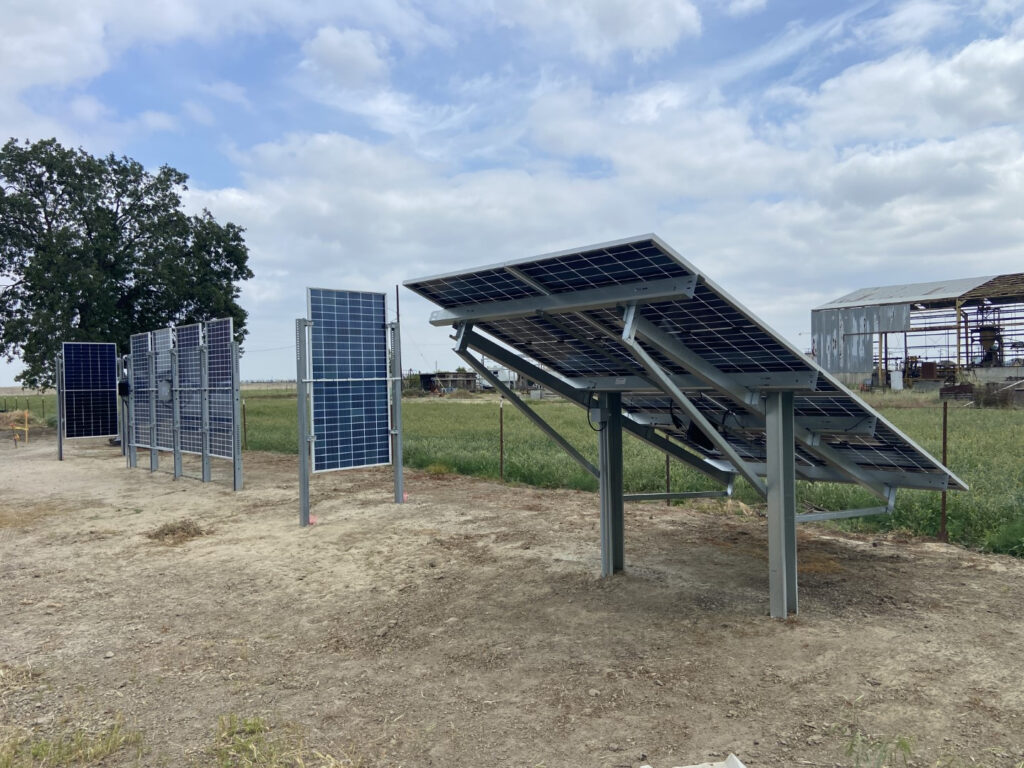
Vertical orientation allows for rain and wind to wash away dust and debris more effectively, potentially minimizing power loss due to soiling.

In colder regions, vertical panels are less likely to be completely covered by snow, allowing for continued power generation throughout winter. In addition, snow reflects sunlight and vertical panels can capture some of this reflected light, potentially boosting winter production in snowy areas.

Balancing curves

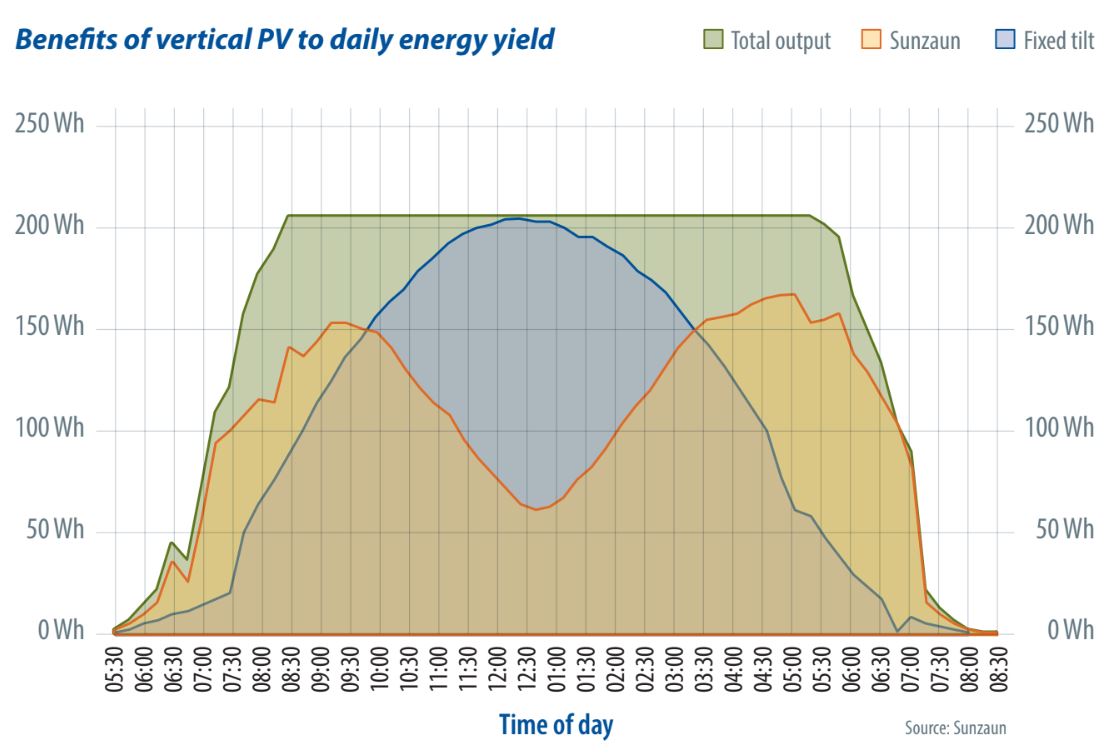
The chart illustrates the benefits of combining a fixed-tilt system with an east-
west oriented Sunzaun system.

The blue curve represents the energy production from a traditional fixed-tilt system, which peaks around midday and features a sharp rise and fall in power out-put either side of that point.

By contrast, the orange curve shows the energy production from an east-west-oriented Sunzaun system, with generation starting early in the morning and continuing steadily into the evening and thus covering periods when the fixed-tilt system is less productive.

Vertical ‘add-powering’ with Sunzaun offers extended daily energy production, electricity generation during demand times, and easy integration with existing systems. – Helge Biernath, CEO of Sunstall Inc.

The green curve, which is the combined total output of both systems, demonstrates how integrating east-west-oriented Sunzaun panels with a fixed-tilt system maintains high energy production levels over a longer period. This results in more balanced and extended energy output throughout the day, maximizing productivity and profitability.

With a vertical solar system, it is possible to seamlessly retrofit existing infrastructure, leveraging current electroni components and avoiding the need for costly new investment.

“Vertical ‘add-powering,’ with Sunzaun offers extended daily energy production, electricity generation during demand times, and easy integration with existing systems,” said Helge Biernath, CEO of Sunstall. He added that these key features not only enhance overall energy production, but also ensure greater profitability and efficiency for existing fixed-tilt installations.

East-west-facing solar panels present a promising avenue for maximizing the efficiency of utility-scale solar farms. As the solar industry continues to expand globally, integrating this innovative approach has the potential to significantly enhance overall energy production. By strategically incorporating east-west panels alongside traditional south-facing systems, solar farms can generate more consistent power throughout the day, contributing to more reliable and resilient renewable energy infrastructure.

This article was originally published in the 2024 September issue of pv magazine USA.
Solar power is everywhere—from rooftops in urban neighborhoods to expansive fields in rural areas. In 2030, solar energy is expected to account for 10% of the world’s electricity. With so many solar panels installed globally, one significant issue has emerged: soiling.

What Is Soiling?

Soiling refers to the accumulation of dirt and debris on solar panels. This seemingly minor problem has a major impact. Dust, pollen, and other particles settle on the surface of solar modules, blocking sunlight and reducing the amount of energy that can be converted into electricity. Studies have shown that soiling can decrease solar output by up to 30%.

The Water Cost of Cleaning

Cleaning solar panels to remove this buildup is a huge task. Globally, maintaining solar panels can consume up to 10 billion gallons of water each year. This water is used to wash away the dirt and grime that accumulates on the panels. In regions where water is scarce, this can be a significant environmental and economic concern.

Tilted vs. Vertical Solar Panels

The problem of soiling is particularly pronounced with traditionally installed tilt solar panels. Panels installed at an angle are more prone to dust accumulation because the tilted surface allows dust and debris to settle and stick more easily.

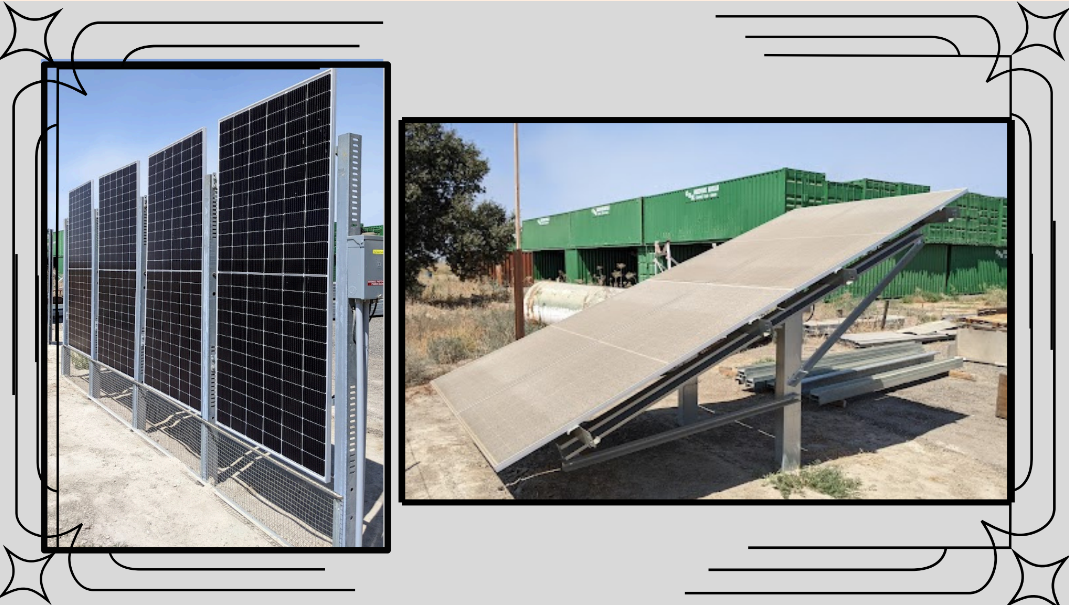
For example, when two panels of the same make and model are installed simultaneously—one at a tilt and one in a vertical position. The tilted panel will become significantly dirtier over time compared to its vertical counterpart as seen above. This is because the angled surface provides a larger area for dust to settle, leading to more frequent and intensive cleaning needs.

In contrast, vertical solar panels—those installed perpendicular to the ground—experience less soiling. The vertical orientation reduces the surface area that dust can adhere to, making it easier to keep the panels clean. Because the panels are not angled, debris tends to slide off more easily, which can significantly cut down on cleaning needs and the associated water usage.

A Cleaner Future

The shift towards vertical solar panels could be a game-changer in tackling the soiling issue. By reducing the amount of dirt that collects on the panels, vertical installations can not only enhance energy efficiency but also lower maintenance costs and environmental impact.

As the solar industry continues to grow, addressing the challenge of soiling will be crucial. Embracing innovative solutions like vertical solar panels could help make solar power cleaner and more sustainable, paving the way for a brighter, greener future.

In the ever-evolving world of agriculture, innovative solutions continually reshape how we approach farming and sustainability. One such groundbreaking development is Cow PV, a concept that merges agricultural practices with renewable energy technologies. But what exactly is Cow PV, and how does it benefit our environment and agricultural practices? Let’s dive into this exciting new trend.

What is Cow PV?

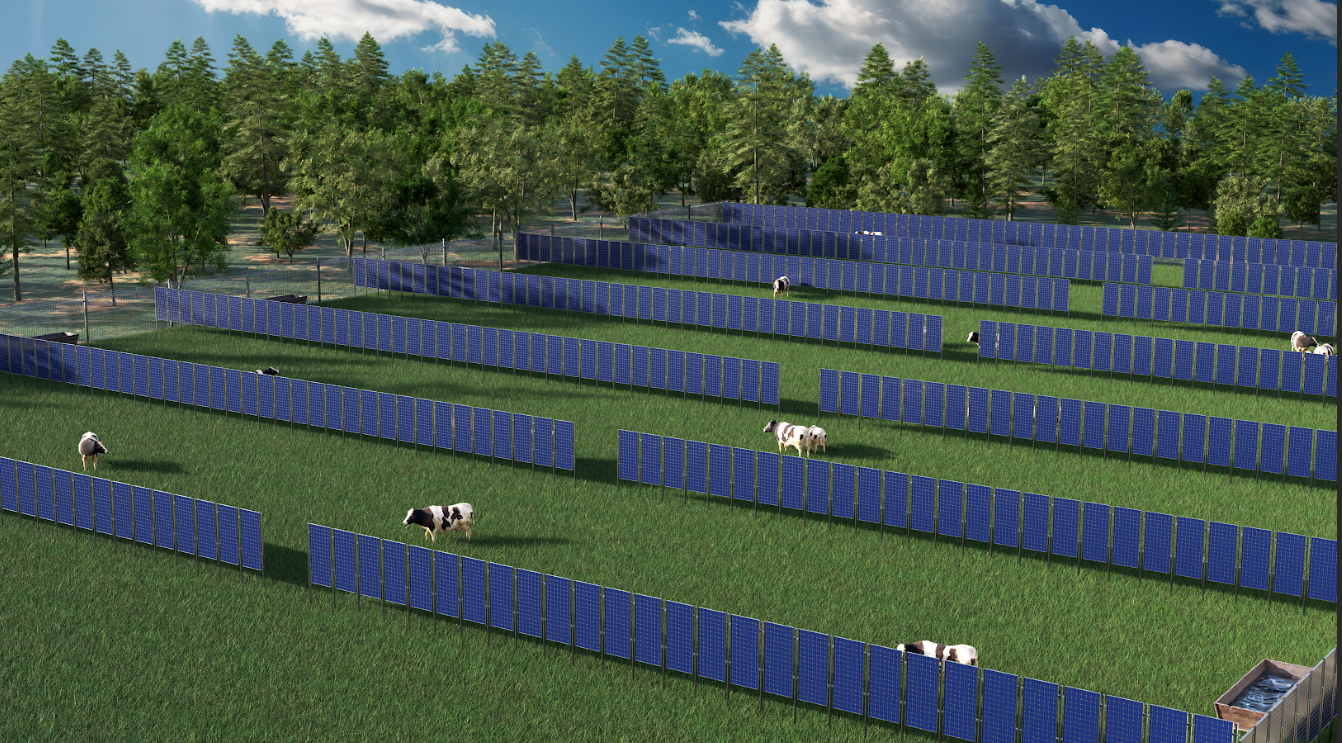
Cow PV, short for Cow Photovoltaics, is an ingenious approach to integrating solar power with traditional farming practices. This system involves placing photovoltaic panels overhead in grazing areas where cattle, horses, or donkeys are present. These panels provide much-needed shelter for the animals while they graze, enhancing their comfort and well-being. But Cow PV doesn’t just stop at animal welfare; it has a range of benefits for the soil and the environment as well.

Benefits for Animals and Soil

The primary advantage of Cow PV is the shade it offers to grazing animals. By protecting cattle and other livestock from the harsh sun, these panels help keep the animals cool and reduce heat stress. But the benefits extend beyond just animal comfort. The shaded area also helps the soil retain moisture more effectively. This increased moisture is crucial for maintaining healthy soil, particularly in arid or semi-arid regions.

Enhancing Soil Health

The positive impact of Cow PV on soil health is profound. The shade provided by the photovoltaic panels prevents soil from drying out too quickly, which is essential for preventing erosion and maintaining soil fertility. Additionally, the droppings from the animals under the panels act as a natural fertilizer, enriching the soil with essential nutrients. This natural fertilization process reduces the need for synthetic fertilizers, promoting a more sustainable approach to farming.

Environmental and Agricultural Synergies

Beyond improving soil health, Cow PV offers several other environmental benefits. By increasing soil moisture, the system helps prevent erosion, reduces the risk of fires, and mitigates flooding. These factors contribute to a more resilient and sustainable ecosystem. Furthermore, the photovoltaic panels themselves generate clean, renewable energy. This means that while the system is enhancing agricultural practices, it’s also contributing to the production of sustainable energy.

Boosting Biodiversity

The overall improvements in soil health and moisture levels foster a more diverse range of plant and animal life. Healthier soil supports a richer array of vegetation, which in turn attracts a variety of wildlife. This increased biodiversity is beneficial for the environment, creating a more balanced and resilient ecosystem.

Conclusion

Cow PV represents a harmonious blend of traditional agriculture and modern technology. By providing shade for grazing animals, improving soil health, and generating renewable energy, this innovative system addresses multiple challenges faced by farmers and environmentalists alike. As we continue to explore and implement such integrated solutions, we pave the way for a more sustainable and resilient future in agriculture. 

Whether you’re a farmer looking for ways to enhance your land or an environmental enthusiast interested in new green technologies, Cow PV offers a compelling example of how we can work with nature to achieve our goals.

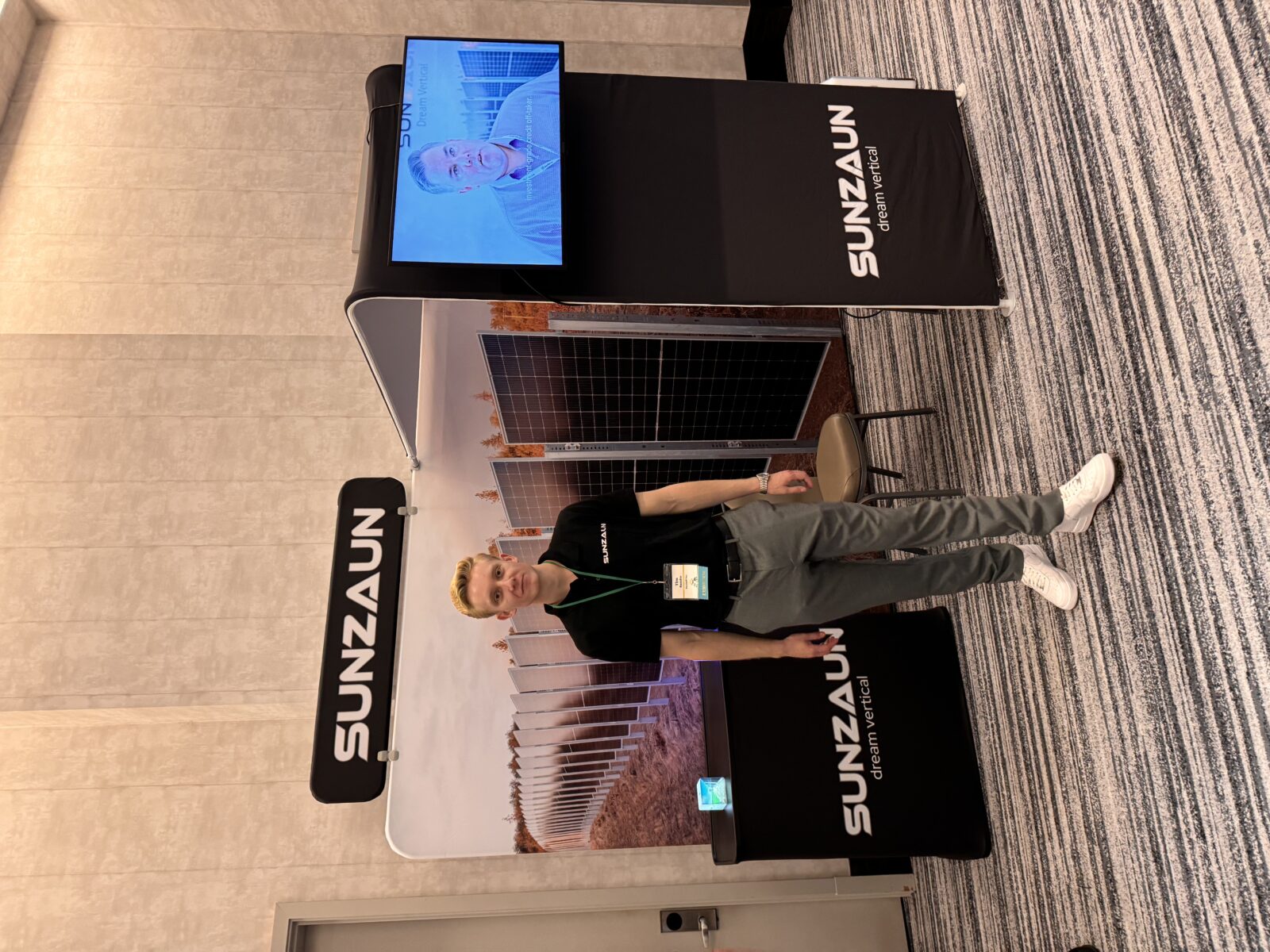
We’re thrilled to share our experience at the recent Solar Farm Summit in Chicago, held from July 8th to 10th! Sunzaun was proud to be an exhibitor at the event, showcasing our innovative vertical solar solutions. Our CEO, Helge Biernath, even had the opportunity to deliver a presentation on the exciting potential of vertical solar power.

The presentation sparked a lot of interest, reflecting the growing buzz around vertical solar farms. The Solar Farm Summit offered excellent networking opportunities. This is particularly valuable for addressing the challenges in agrivoltaics because it brings together a diverse range of stakeholders like farmers, renewable energy professionals and researchers. Here’s a glimpse into how different industries are receiving this new technology:

Farming Industry: There’s definite excitement about the potential of vertical solar to increase food production and generate clean energy on the same land, essentially creating a dual-use system. However, some concerns exist about the high initial investment of vertical farming systems. For reference, check out the smart solar work done by the American Farmland Trust.

Solar Industry: Collaboration between academia and industry is on the rise. Research and development for vertical solar panels are underway to improve efficiency and address challenges. This indicates a growing interest in integrating vertical solar into the solar energy landscape. The agrivoltaics testing grounds at University of Colorado are a great example of innovative projects.

Academia: Research into vertical solar panels and their applications is ongoing, with institutions partnering with industry to develop new technologies. There’s a strong focus on overcoming limitations and maximizing the potential of vertical solar energy production. Review the research by Arizona State University to learn more.

The Solar Farm Summit was a fantastic platform to connect with industry leaders, discuss the latest advancements in agrivoltaics, and showcase how Sunzaun’s vertical solar systems can contribute to a more sustainable future for agriculture and renewable energy. We look forward to continuing the conversation and being a part of the future of solar energy!

Sunzaun is excited to announce that we will be exhibiting at the 2024 Solar Farm Summit, North America’s premier agrivoltaics conference and expo. The event will take place in Chicago, IL, bringing together industry leaders, innovators, and stakeholders to explore the synergistic potential of solar energy and agricultural production.

Join us to discover how Sunzaun’s cutting-edge vertical solar system integrates seamlessly with agricultural practices, promoting sustainable land stewardship and maximizing energy production. Don’t miss this opportunity to connect with experts and explore the latest advancements in agrivoltaics.

Mark your calendars and visit our booth to learn more about our innovative technologies and how we are contributing to the future of renewable energy and agriculture. Get your tickets here.

We look forward to seeing you at the 2024 Solar Farm Summit!

In the face of the pressing demand for sustainable and efficient energy solutions worldwide, agrivoltaics emerges as a pioneering concept at the intersection of agriculture and renewable energy. This innovative approach harnesses the power of the sun while coexisting harmoniously with agricultural practices. In the first part of our two-piece introduction to agrivoltaics, we explored the motivations driving the adoption of agrivoltaics and its vast potential to revolutionize land use. This second part discusses diverse system types that have emerged, the challenges faced, and noteworthy pioneering projects that showcase the transformative power of this sustainable technology.

Bernadette Del Chiaro, Executive Director, CALSSA, on Agrivoltaics

Agrivoltaics System Types

In order to realize the potential benefits of a dual use concept, care must be taken in the technical planning of such a project to ensure that the PV system and the agricultural management of the land are compatible. 

The approach taken in Germany is particularly noteworthy here. The authors of the standard DIN SPEC 91434:2021-05, who have defined the applicable regulations for AgriPV systems in Germany, have placed particular emphasis on the fact that the primary use of the land must continue to be agriculture. They define agrivoltaics as “combined use of one and the same land area for agricultural production as the primary use, and for electricity production by means of a PV system as a secondary use” (Link to standard). 

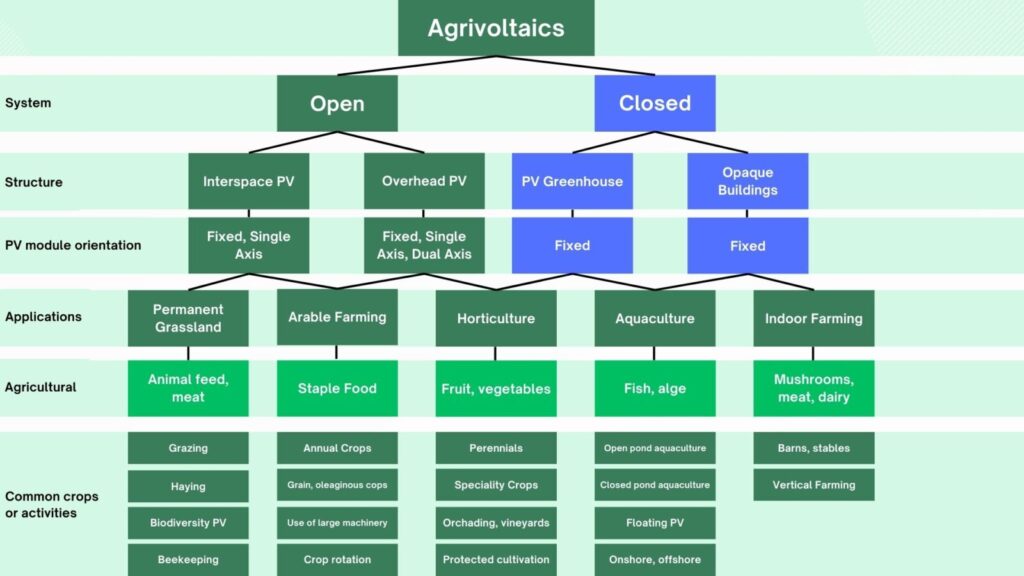
Agrivoltaic systems according to Fraunhofer ISE

It is therefore important to find the right configuration for each application, depending on the type of farming and local climatic conditions. From a technical point of view, there are different types of solar systems that can be used for agricultural purposes.

The Fraunhofer Institute distinguishes between open and closed systems. Open systems include interspace PV, which allows agriculture between the rows of the PV system, and overhead PV, which was designed for growing plants under the panels. The closed systems include PV greenhouses and opaque buildings, which enable indoor farming and are not agrivoltaics in the strict sense of the word. (Fraunhofer ISE)

A good overview of different solar designs and other planning considerations is provided in the “Getting Started with Agrisolar Tutorial” by the Agrisolar Clearinghouse.

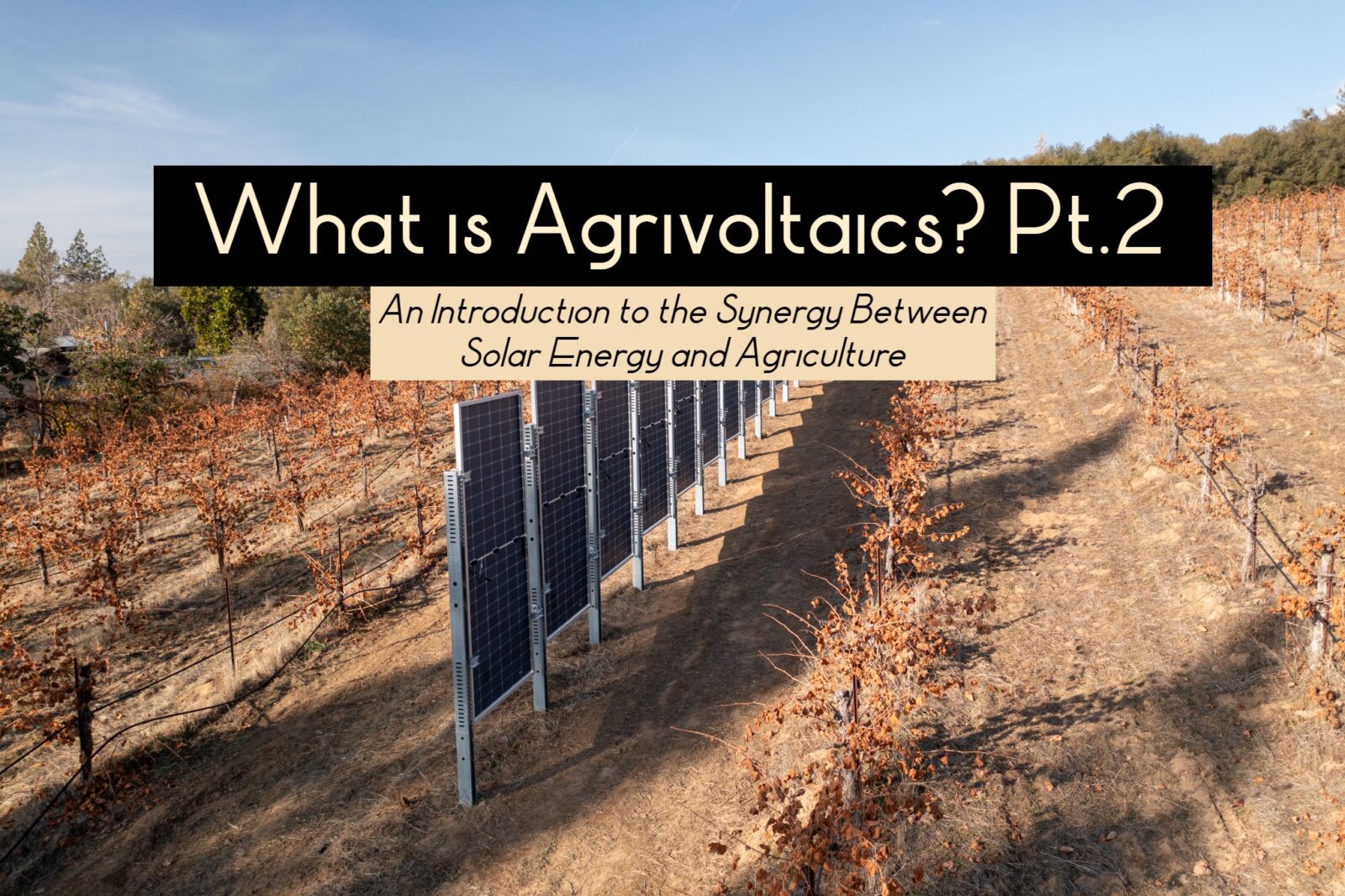
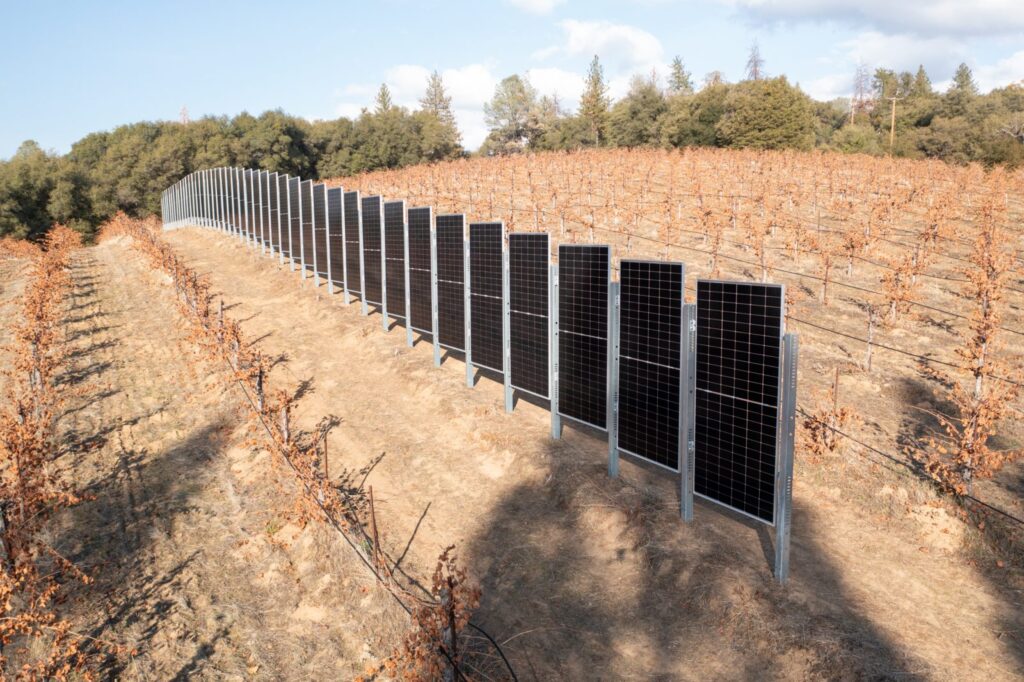
Harvesting grapes and solar energy on the same vineyard in California with a vertical Sunzaun system

Challenges

The integration of solar energy systems with agriculture presents a promising avenue for sustainable energy generation. However, this innovative approach is not without its challenges:

System Integration

One of the primary challenges in agrivoltaics lies in seamlessly integrating solar installations with agricultural practices. Balancing the needs of both systems to optimize energy production and crop yield requires careful planning and technological advancements.

Crop Yield

The impact of solar panels on crop yield is a critical consideration. Adequate sunlight is essential for plant growth, and finding the optimal arrangement to ensure sunlight penetration while maximizing energy production poses a challenge. Striking the right balance is crucial to maintaining agricultural productivity.

Economic Viability

The economic feasibility of agrivoltaic projects is another challenge. Determining the most cost-effective and efficient systems that deliver both energy and agricultural outputs requires comprehensive analysis. Factors such as initial investment, maintenance costs, and overall project sustainability need to be carefully evaluated for long-term economic viability.

Research

Despite the potential benefits, agrivoltaics is a relatively new field, and further research is essential to address existing challenges and unlock its full potential. Collaborative efforts between the solar and agriculture sectors are necessary to develop innovative solutions, improve technology, and refine best practices for successful implementation.

Pioneering Projects

A number of pioneering projects have set themselves the task of solving the existing challenges. At various locations around the world, researchers, farmers and solar developers are gathering important findings on electricity and crop yields, system integration and other important data on soil health and biodiversity. The AgriSolar Atlas provides an overview of existing installations in the USA. Some particularly interesting projects from the USA and Europe are presented below.

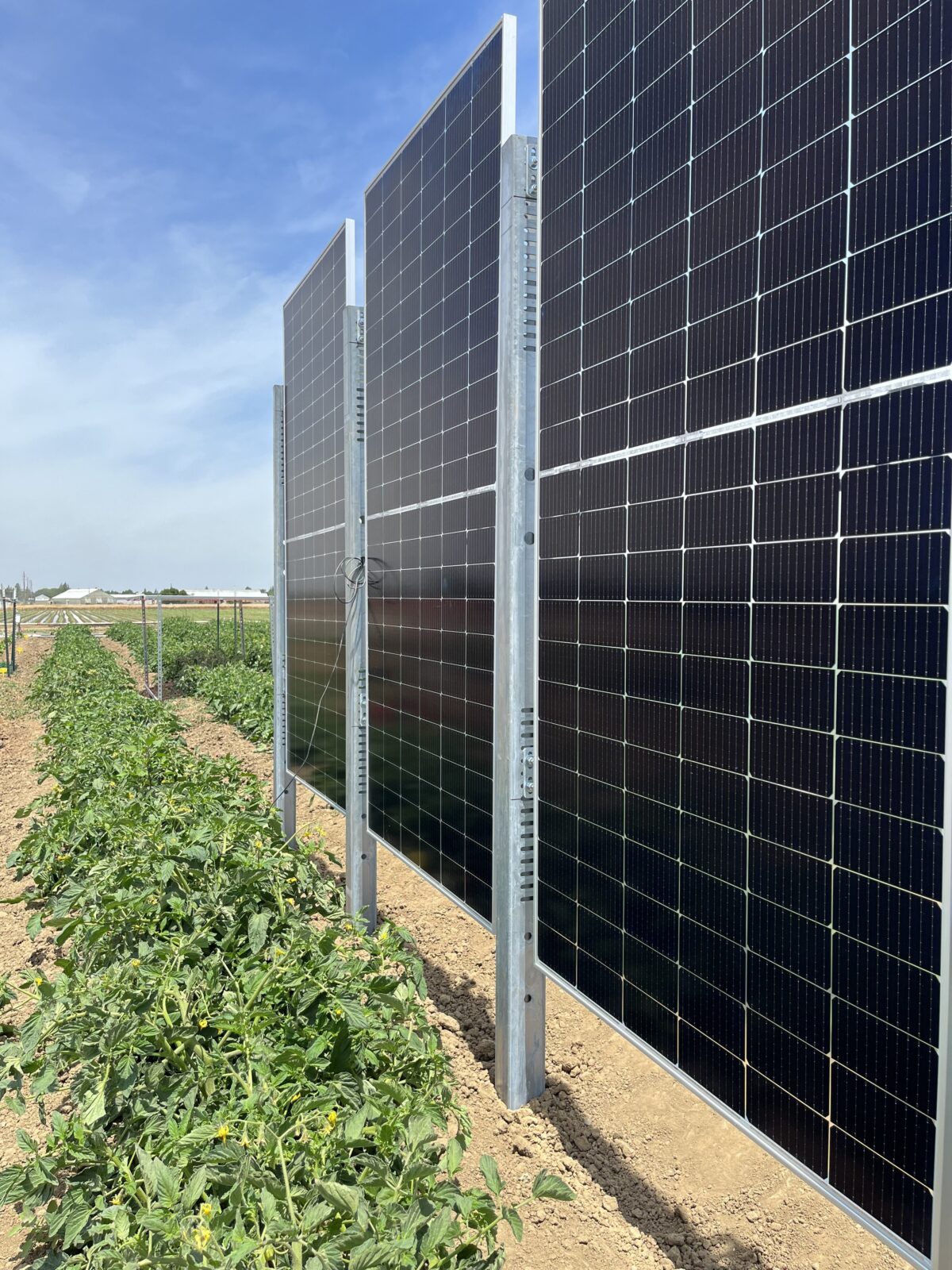
Sunzaun on a research project at UC Davis

Jacks Solar Garden

Collaborating with the University of Arizona, Colorado State University, the National Renewable Energy Laboratory, and Sprout City Farms, Jack’s Solar Garden is establishing a 1.2 MW community solar garden spanning five acres south of Longmont, Colorado. This initiative involves the creation of research plots.

Fraunhofer Institute for Solar Energy Systems ISE

The Fraunhofer Institute has been involved in various international research projects. For instance, the “SynAgri-PV” research project aims to comprehensively outline and assess key technical, legal, economic, and social factors influencing the introduction of agrivoltaics in the German market. The project further seeks to formulate recommendations to facilitate the widespread adoption of agrivoltaics.

University of California, Davis

At the University of California, Davis, a test field has been established by researchers. This field cultivates diverse plant species under different light conditions, as detailed in our blog article (link). Equipped with light filters, the field captures pertinent data throughout the plant growth stages. Professor Majdi Abou Najm’s team is primarily exploring how agrivoltaics can simultaneously enhance crop yield, conserve irrigation water, and contribute to renewable energy generation for the nation.

Conclusion

The symbiosis of agriculture and photovoltaics is a promising approach to combating climate change and strengthening agriculture at the same time. On a comparatively small portion of agricultural land, agrivoltaics can help secure crop yields and provide communities with renewable energy. The first pioneers are already showing what the joint future of agriculture and the energy sector can look like and Sunzaun is grateful to be part of it.

Have a Custom Boundary, Farm, or Corridor in Mind?

Speak directly with our solar infrastructure engineering team in Novato, CA to model boundary generation, wind tolerances, foundation engineering, and financial payback.