Resource Center

Explore our collection of articles, project updates, research summaries, and technical resources covering vertical solar, agrivoltaics, and the evolving solar industry.

Solar energy systems are evolving—not just in what they’re made of but also in how and where they’re installed. One innovative approach gaining attention is using vertical bifacial solar panels on the sides of irrigation canals.

These panels collect sunlight from the front and back, allowing them to harness more energy throughout the day. But beyond the tech itself, it’s the placement strategy that makes this idea stand out.

Why Go Vertical — Along a Canal?

Traditional solar arrays are typically installed at a tilt (e.g., 20°) facing south. That works well, but it requires open land, is prone to dust accumulation, and creates steep seasonal production curves with big summer peaks and winter valleys.

In contrast, vertical bifacial systems can:

  • Collect light on both sides, especially when ground or nearby surfaces reflect sunlight.
  • It stays much cleaner in dusty environments—vertical orientation reduces soiling by up to 95% compared to tilted panels¹.
  • Perform better in winter months, leading to a flatter seasonal production profile — important for grid stability².
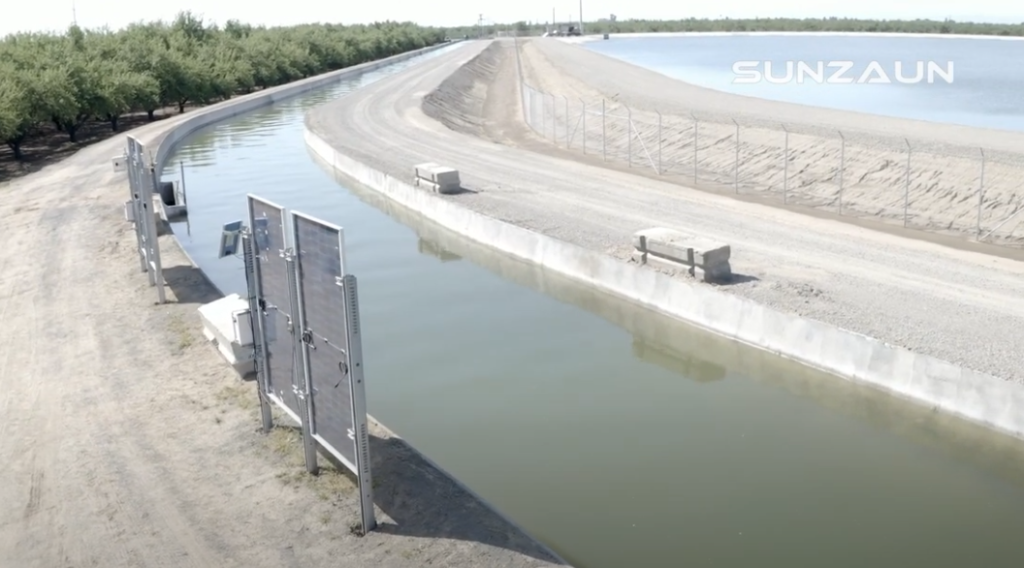
When placed along a single canal bank, these panels avoid the need for complex mounting over the water. This is a major advantage in regions where canal access is only available from one side or where installing overhead structures is too costly or logistically impractical.


What About the Energy Output?

Modeling shows that a south-facing vertical bifacial array, without any reflector, can deliver about 87% of the annual energy of a standard south-facing 20° tilted monofacial array — but with superior performance in the non-summer months².

Adding a simple reflective tarp across the canal (or part of it) can increase that output by another 19%–24 %. If a hybrid reflector is used — combining a durable base with a shiny aluminized Mylar top layer — the boost can reach 41%–44%³.

In addition, this setup helps to reduce evaporation from the canal by about 61%, thanks to shading and reduced wind-driven losses — a valuable bonus in water-stressed regions⁴.

To put that into perspective: saving 610,000 gallons per year (from a canal segment losing 1 million gallons annually) is equivalent to the annual water use of 9 to 22 Californians, depending on regional consumption habits⁵.

In agriculture, this amount of water could irrigate around 0.37 acres of rice or 0.63 acres of field crops, showing how solar canals help conserve both water and energy⁶.

Now scale that up: California has approximately 4,000 miles (6,400 km) of irrigation canals⁷. If similar systems were deployed along the canal network, they could save up to 63 billion gallons of water per year⁸ — enough to supply more than 2 million people annually or to irrigate over 50,000 acres of farmland⁸.


Where and When Does It Make Sense?

This design is particularly well-suited to:

  • North-south oriented canals less than 17 feet (5.2 m) wide⁴
  • Dusty, high-soiling environments (e.g., California’s Central Valley)¹
  • Locations where land availability is limited
  • Projects where only one canal bank is accessible

In these scenarios, vertical systems can be cost-competitive or even cheaper than traditional canopy systems – especially as structural and installation costs (e.g., steel, concrete) continue to rise. Modeling suggests that vertical systems could remain economically viable even on canals up to 25 feet wide, depending on material and labor costs⁴.


Conclusion

Vertical bifacial systems – like SunZaun – offer a promising alternative to conventional solar designs, especially for dual-use applications like canals. They’re more space-efficient, resilient to dust, and better balanced across seasons. And when paired with a smart reflector design, they can rival — or even surpass — traditional systems in total output.

Rethinking orientation and placement may be just as important as improving the panels themselves.

Sources

  1. Bhaduri & Kottantharayil, Soiling Analysis of Vertical PV, IEEE, 2019
    https://ieeexplore.ieee.org/document/8887284
  2. Reagan & Kurtz, Energetic Comparison of Vertical Bifacial to Tilted Monofacial Solar, IEEE, 2022
    https://ieeexplore.ieee.org/abstract/document/9924604
  3. Reagan et al., Material Selection and Cost Modeling for Reflectors in Vertical Canal PV Systems, IEEE, 2024
    https://ieeexplore.ieee.org/abstract/document/10829584
  4. Field data from UC Merced Project Nexus and submitted PVSC 2025 paper (in review)
  5. Water usage per capita:
    – USGS California Water Use Statistics
    – Valley Water – Understanding Your Water Use
    – Los Angeles Times – July 2024 Water Tracker
  6. Agricultural water needs:
    – UCANR Rice Irrigation Guide (PDF)
    – Press Democrat – California Crops and Water Use
  7. Smithsonian Magazine – California’s Solar Canal Pilot

Los Angeles Times – Opinion: California’s Solar Canals Could Save Water and Generate Power
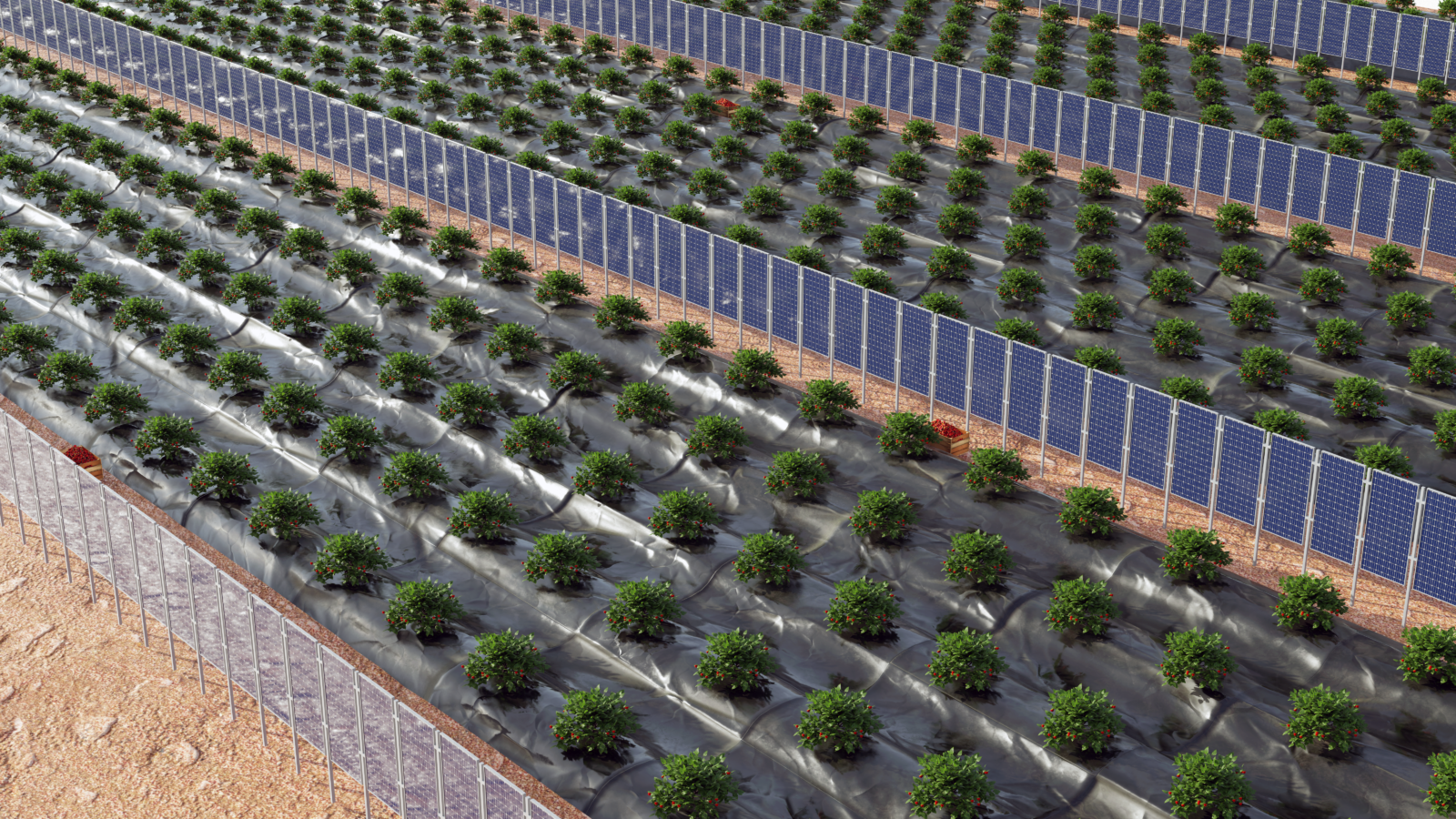
Heat stress is becoming a concern in berry farming, with rising temperatures putting crops at risk. While moderate heat stress levels can benefit berries by extending the growing season and enhancing flavor profiles. Excessive heat can have detrimental effects. The same heat that may initially boost plant health and fruit development can, when it becomes too intense, turn against the crop. Excessive heat disrupts plant growth, compromises productivity, and throws off the delicate hormone balance within the plant. This often results in problems such as sunscald and fruit cracking.

To mitigate these issues, farmers are exploring innovative solutions, such as providing shade during the hottest parts of the day. By offering protection from the intense afternoon sun while allowing the morning and evening sunlight to continue ripening the berries, the growth cycle can be optimized. This strategy not only prevents overheating but also promotes healthy berry development.

One such solution is the Sunzaun system, which provides a practical method of shading crops during peak heat hours. By using vertical solar panels, the Sunzaun system creates shade that helps prevent excessive heat from reaching the berries. This system allows farmers to protect their crops from the harmful effects of heat stress, all while enabling them to harness solar energy.

The integration of solar energy through agrovoltaic systems offers an additional benefit to farmers. Not only does the shade from solar panels protect the crops, but the system also generates electricity. This allows farmers to offset the cost of the solar installation by using the energy produced on-site or selling it back to the grid. In this way, the combination of agriculture and solar energy production increases the overall value of the farm, providing both environmental and economic benefits.

By embracing these sustainable solutions, berry farmers can enhance productivity and reduce the risks associated with extreme heat. The Sunzaun system and agrovoltaic technology provide a promising pathway to adapting to climate change and improving crop resilience, ultimately leading to healthier, more robust berry production.

Fencing is a staple in our everyday lives, often seen in backyards, industrial yards, and surrounding properties. It serves numerous functions, from providing privacy to securing spaces. Traditional options like chain-link fences, wooden fences, and walls have long been relied upon for both security and privacy. But as technology evolves, so do how we enhance and protect our spaces.

(more…)

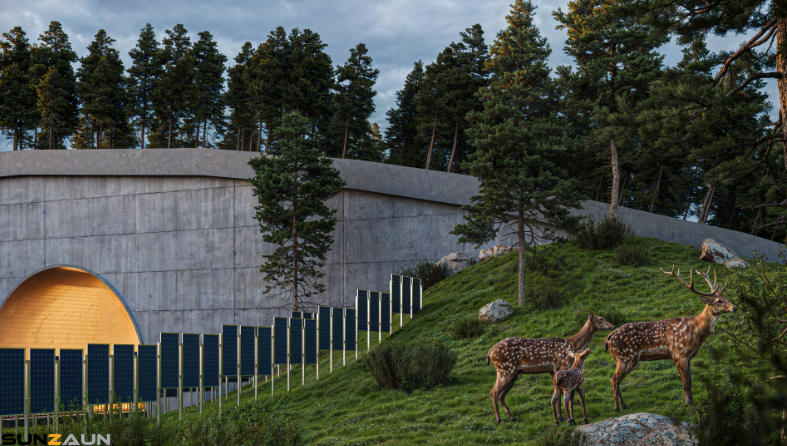
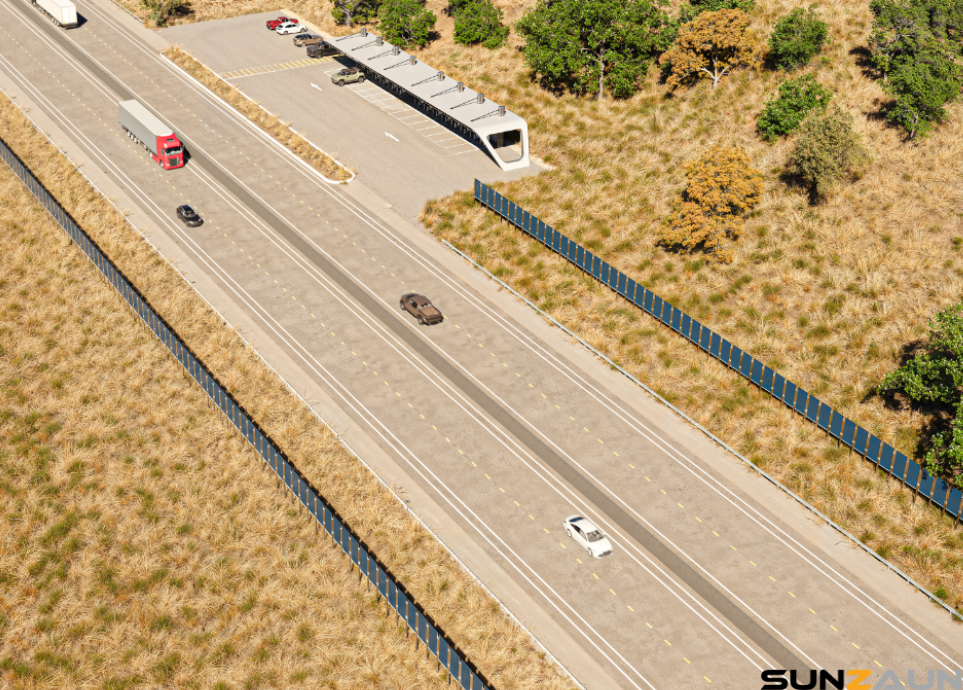
Senate Bill No. 49, also known as SB 49, was signed into law on October 7, 2023, marking a significant step toward advancing California’s renewable energy goals. The bill directs the California Department of Transportation (Caltrans) to evaluate the potential for developing renewable energy generation, energy storage, and electrical transmission infrastructure along state highways. The goal is to explore how public lands, particularly highways and their rights-of-way, can be leveraged to meet California’s energy needs while promoting sustainability.

(more…)

On September 30th, Rutgers University celebrated a significant milestone with the ribbon-cutting ceremony for its groundbreaking Sunzaun vertical photovoltaic (PV) system at the Cook Campus in New Jersey. This innovative agrovoltaic project is prominently visible from Highway 1. It serves as a striking example of how sustainable agriculture and renewable energy can harmoniously coexist.

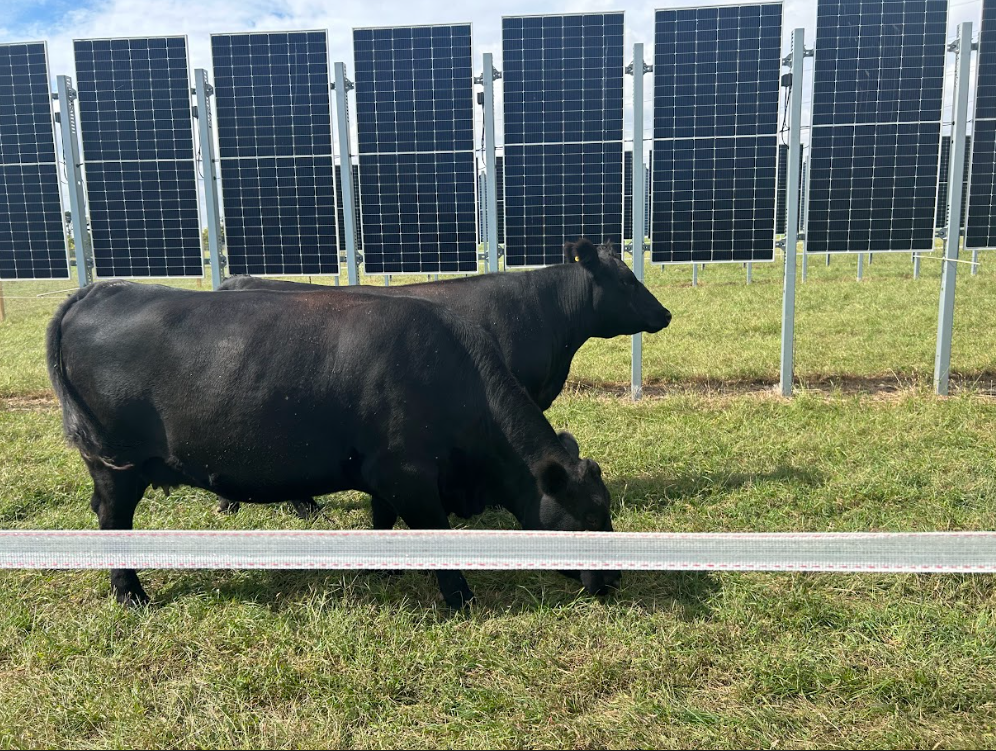
The Cow PV Initiative uniquely integrates vertical solar panels with cattle grazing. Creating a dual-use environment that benefits both energy production and agricultural practices. This pioneering approach not only enhances land efficiency but also exemplifies the potential for synergy between renewable energy and livestock management.

As part of a comprehensive study, researchers have established three experimental blocks. One at a standard height and two at varying heights. To investigate how these configurations influence cow grazing patterns and the quality of the surrounding grass. By analyzing the interplay between solar panel height and pasture health, the team aims to uncover the optimal setup for maximizing both energy output and the nutritional quality of the pasture.

The primary objective of this research is to understand how cattle graze in relation to the solar infrastructure. Insights gained from this study could lead to innovative practices that enhance productivity for farmers. All the while advancing renewable energy initiatives.

We extend our heartfelt gratitude to the many supporters who joined us in celebrating this important milestone for sustainability. A special thanks goes to Executive Dean Laura Lawson, Rutgers Senior Vice Provost of Research Denise Hein, New Jersey Senator Bob Smith, New Jersey Secretary of Agriculture Ed Wengryn, New Jersey Board of Public Utilities Commissioner Marian Abdou, U.S. Department of Energy Solar Energy Technologies Office Director Becca Jones-Albertus, and New Jersey Assemblywoman Andrea Katz. Their commitment to advancing renewable energy solutions has been instrumental in bringing this project to fruition.

This initiative not only marks a significant step forward in agrovoltaic research but also highlights Rutgers’ dedication to fostering innovative solutions for a sustainable future. We invite you to stay tuned as we continue to explore the potential of agrovoltaics. It has a transformative impact on both farming and energy production. Together, we can build a greener tomorrow! 

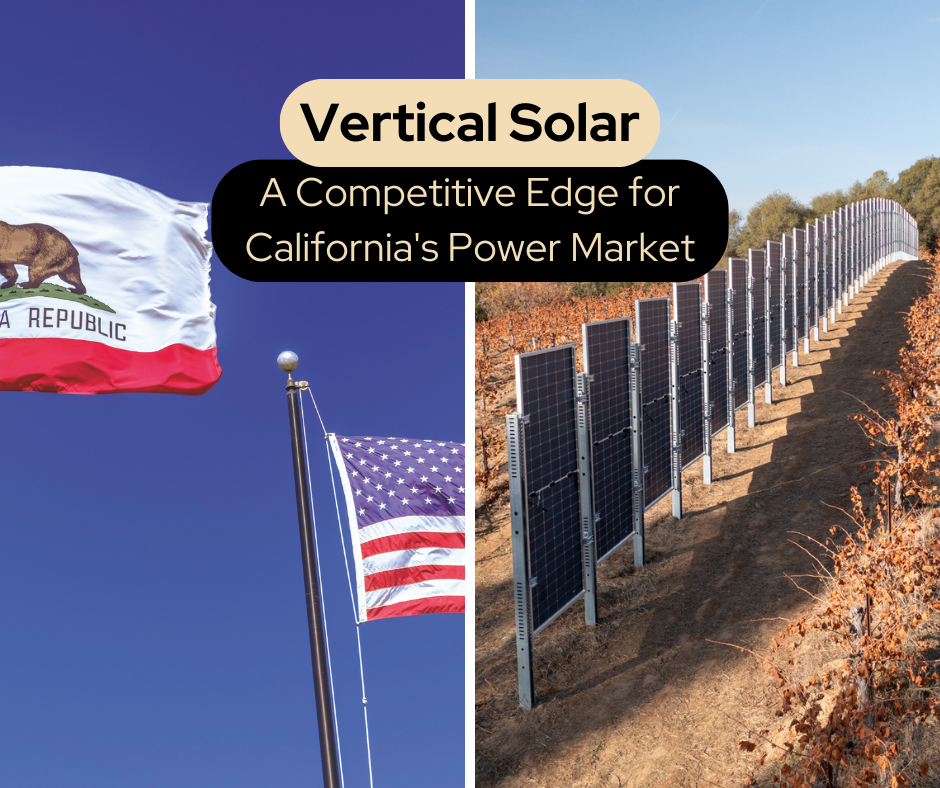
As California strives to meet its ambitious renewable energy targets, innovative solar photovoltaic (PV) systems are poised to play a crucial role in optimizing the power market. Vertical Bifacial East-West designs, such as those championed by Sunzaun, offer substantial benefits over traditional South-facing installations. By leveraging unique production profiles, these systems enhance market value, optimize system costs, and support agricultural integration. This article explores how Vertical Bifacial East-West solar systems can be a game-changer for California, addressing challenges like the Duck Curve and promoting sustainable energy practices.

Revenue Prospects and Market Value Advantages

Innovative solar designs, particularly Vertical Bifacial East-West configurations, provide significant market value advantages due to their unique production profiles. Unlike standard South-facing installations that peak during midday, Vertical Bifacial East-West systems capture morning and afternoon sunlight, resulting in a more balanced energy production throughout the day. This profile aligns better with peak demand periods, leading to higher profile values and substantial additional market revenues.


Despite the higher initial investment costs, the long-term benefits and additional revenues from these innovative systems ensure attractive returns. As the demand for clean energy continues to rise, the ability of Vertical Bifacial East-West designs to generate higher market value becomes increasingly critical.

System Cost Optimization and Dual-Use Potential

With the large-scale expansion of PV installations, optimizing system design and production profiles becomes essential for economically viable deployment. Vertical Bifacial East-West designs not only offer enhanced energy production but also facilitate dual land use by integrating agricultural practices. This approach, known as agrivoltaics, allows for the simultaneous cultivation of crops and solar energy generation on the same land, maximizing land use efficiency and supporting sustainable farming practices.

Agrivoltaics provides numerous benefits, including improved land productivity, enhanced crop yields due to partial shading, crop protection in some instances ( wind, hail) and diversified revenue streams for farmers. By combining agriculture and solar energy, California can address land use concerns and support the agricultural sector while advancing its renewable energy goals.

Addressing the Duck Curve Challenge

One of the significant challenges in California’s power market is the Duck Curve, a phenomenon characterized by a sharp increase in electricity demand in the late afternoon and early evening, followed by a steep drop-off in solar generation. Traditional South-facing solar systems exacerbate this issue by producing the most energy during midday, when demand is relatively low.

Vertical Bifacial East-West systems offer a solution by generating more power during the morning and afternoon, reducing the steepness of the Duck Curve. This balanced production profile helps stabilize the grid, ensuring a more reliable and efficient energy supply. By mitigating the Duck Curve, these innovative PV systems contribute to a more resilient and flexible power market.

Economic Viability and Land Lease Sensitivity

Economic viability is a crucial consideration for any PV installation. Vertical Bifacial East-West systems demonstrate higher economic viability than standard South-facing systems due to their enhanced market values and sufficient full load hours. These designs show the highest equity returns among various analyzed configurations, making them an attractive investment for stakeholders.

Moreover, innovative PV systems like Vertical Bifacial East-West designs are less sensitive to variations in land lease costs. Their larger land requirements are offset by lower module density, allowing for additional agricultural use. This dual-use capability reduces overall system costs and enhances the financial feasibility of solar projects, particularly in regions with high land lease expenses.

Conclusion: A Path to a Sustainable Future

Innovative PV system designs, especially Vertical Bifacial East-West and Steep-South configurations, offer significant advantages in terms of market value and economic returns. These designs are essential for optimizing the PV portfolio, reducing system costs, and integrating agricultural uses, thereby contributing to a cost-effective and sustainable energy system.

Sunzaun’s commitment to advancing Vertical Bifacial East-West solar technology positions it as a leader in the renewable energy sector. By harnessing the unique benefits of these innovative systems, California can achieve its renewable energy targets, support the agricultural community, and address grid stability challenges. Embracing Vertical Bifacial East-West solar designs is a strategic move towards a cleaner, more resilient, and sustainable energy future for California.

Have a Custom Boundary, Farm, or Corridor in Mind?

Speak directly with our solar infrastructure engineering team in Novato, CA to model boundary generation, wind tolerances, foundation engineering, and financial payback.